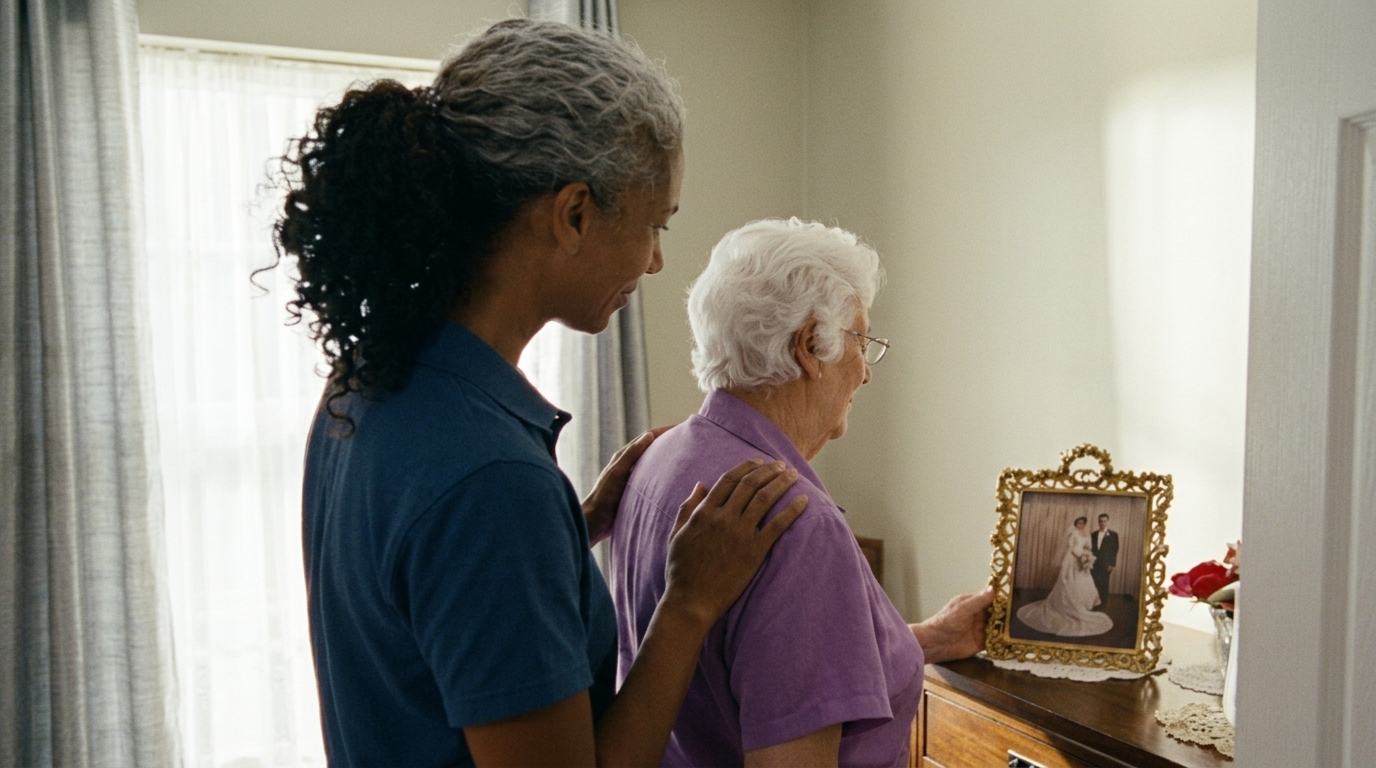
Your parent says they are fine. They have their routines, their independence, their familiar surroundings. But something feels different. They sound quieter on the phone. Less interested in the news. You are worried, but not quite sure whether you are imagining things.
Loneliness in older people is often invisible. Age UK research tells us that over two million people aged 75 and over live alone in England. Many of them are happily solitary. But 940,000 older people report feeling lonely on a regular basis, and the health consequences are serious. Chronic loneliness is as harmful to the body as smoking fifteen cigarettes a day.
So how do you tell whether your parent is genuinely lonely, or simply naturally quiet? Here are five signs that are worth paying attention to.
Chronic loneliness is as harmful to the body as smoking fifteen cigarettes a day.
Five Signs Your Parent Might Be Lonely
1. They mention being bored, or say the days feel the same
Loneliness often presents as boredom. If your parent frequently says things like "there is not much going on" or "the days all blur together," that deserves attention. They are not simply idle. They are unstimulated and disconnected from the social rhythms that give days shape and meaning.
2. They have pulled back from things they used to enjoy
Did your mother used to knit with a local group? Has your father given up his volunteer work? Withdrawal from hobbies is a classic sign of isolation. Sometimes it is a matter of energy. But often, the activity was tied to people, and without that social element, the activity quietly loses its point.
3. Something has shifted in how they sound on the phone
Pay close attention to tone. Lonely people often sound flatter, less engaged. They may ask fewer questions about your life. They may sound genuinely relieved just to hear a familiar voice. That shift from the person who always had something to say, to someone who seems to be filling time with the call, is worth naming out loud.
4. They repeat the same stories, or return to the same worries
When someone has no one to talk to regularly, conversations loop. They will tell you the same story they told you last week, because there has been no one else to tell it to. Or they will return to the same concern, again and again. This happens because they are not getting the ongoing flow of social contact that naturally breaks these patterns.
5. They seem genuinely disappointed when you cannot visit
Some lonely older people ask directly for more contact. Others hint at it gently. They mention how much they enjoyed your last visit. They sound unusually flat when plans change. This is your parent telling you, in the way available to them, that they need connection. Even if they never use that word.

What Actually Helps
Recognising the signs is the first step. But what genuinely makes a difference? Regular phone calls help. They are not enough on their own. Isolation responds best to consistent, in-person connection with someone who knows your parent as a person.
If your parent's social circle has grown smaller through bereavement, reduced mobility or simply the passage of time, professional companionship can make a real and lasting difference. A companion visits regularly, for conversation, outings, errands or simply a shared cup of tea, and builds the kind of ongoing human connection that cannot easily be scheduled into a busy family life.
Wondering whether companionship support might help your parent? We offer a free, no-obligation assessment. No pressure. Just an honest conversation about what your loved one needs.
Book a Free AssessmentThe Main Point
Loneliness in older people is not inevitable, and it is not a personality trait. It is a health issue. One that responds well to regular, genuine human connection. If you recognised your parent in any of these signs, you are already halfway there. The next step is a simple one: ask them directly, and gently, whether they have been feeling a little isolated.
Loneliness thrives in silence. Connection starts with a question.